
'%3e%3cpath%20d='M21.97,16.783C18.592,14.338%2014.595,14.954%2012,17.1C11.344,16.628%2010.011,15.91%209.895,15.621C9.48,14.59%207.341,14.568%207.01,14.882C6.812,15.07%206.83,15.344%206.553,15.331C4.832,15.252%203.708,15.794%201.993,16.774'%20style='fill:none;fill-rule:nonzero;stroke:%2310b981;stroke-width:1.14px;'/%3e%3c/g%3e%3cg%20transform='matrix(1,0,0,2.04091,-14.1682,-22.4853)'%3e%3cpath%20d='M15.074,18.836L15.074,17.423'%20style='fill:none;stroke:%2310b981;stroke-width:0.62px;stroke-linecap:square;stroke-miterlimit:1.5;'/%3e%3c/g%3e%3cg%20transform='matrix(1,0,0,2.04091,6.00754,-22.5274)'%3e%3cpath%20d='M15.074,18.863L15.074,17.423'%20style='fill:none;stroke:%2310b981;stroke-width:0.62px;stroke-linecap:square;stroke-miterlimit:1.5;'/%3e%3c/g%3e%3cg%20transform='matrix(1,0,0,1.10679,-1,-3.20585)'%3e%3cpath%20d='M2,5.5C5.5,3.5%209.5,4%2012,5.8C14.5,4%2018.5,3.5%2022,5.5L22,16.8C18.5,14.8%2014.5,15.3%2012,17.1C9.5,15.3%205.5,14.8%202,16.8L2,5.5Z'%20style='fill:none;fill-rule:nonzero;stroke:%236ee7b7;stroke-width:1.14px;'/%3e%3c/g%3e%3cg%20transform='matrix(1,0,0,1.026,-1,-2.90714)'%3e%3cpath%20d='M12,5.8L12,17.1'%20style='fill:none;fill-rule:nonzero;stroke:%236ee7b7;stroke-width:1.2px;'/%3e%3c/g%3e%3cg%20transform='matrix(0.868549,0,0,1.12022,1.58071,-2.86274)'%3e%3cpath%20d='M8,15.6L8,19.8L6.5,18.5L5,19.8L5,15.6'%20style='fill:none;fill-rule:nonzero;stroke:%236ee7b7;stroke-width:1.2px;'/%3e%3c/g%3e%3cg%20transform='matrix(1,0,0,1,-1,-3.75633)'%3e%3cpath%20d='M5,9C6.467,8.4%207.967,8.5%209.5,9.3'%20style='fill:none;fill-rule:nonzero;stroke:%236ee7b7;stroke-width:1.2px;'/%3e%3c/g%3e%3cg%20transform='matrix(1,0,0,1,-1,-3.75633)'%3e%3cpath%20d='M5,12C6.333,11.467%208.119,11.635%209.119,12.235'%20style='fill:none;fill-rule:nonzero;stroke:%236ee7b7;stroke-width:1.2px;'/%3e%3c/g%3e%3cg%20transform='matrix(0.988254,-0.152823,0.152823,0.988254,6.85356,-2.53705)'%3e%3cpath%20d='M5,12C6.333,11.467%208.119,11.635%209.119,12.235'%20style='fill:none;fill-rule:nonzero;stroke:%236ee7b7;stroke-width:1.2px;'/%3e%3c/g%3e%3cg%20transform='matrix(1,0,0,1,-1,-3.75633)'%3e%3cpath%20d='M14.5,9.3C16.033,8.5%2017.533,8.4%2019,9'%20style='fill:none;fill-rule:nonzero;stroke:%236ee7b7;stroke-width:1.2px;'/%3e%3c/g%3e%3cg%20transform='matrix(1,0,0,1,-1,2.24367)'%3e%3cpath%20d='M5,9C6.467,8.4%207.967,8.5%209.5,9.3'%20style='fill:none;fill-rule:nonzero;stroke:%236ee7b7;stroke-width:1.2px;'/%3e%3c/g%3e%3cg%20transform='matrix(0.999988,0.00496871,-0.00496871,0.999988,-0.955288,2.16055)'%3e%3cpath%20d='M14.5,9.3C16.033,8.5%2017.533,8.4%2019,9'%20style='fill:none;fill-rule:nonzero;stroke:%236ee7b7;stroke-width:1.2px;'/%3e%3c/g%3e%3c/svg%3e)
توضیح
در آغاز بازی بیشتر مهرهها پشت پیادهها محصورند. گسترش یعنی بردن آنها از خانههای آغازین به جاهایی که خانههای مفید را کنترل کنند، دفاع یا حمله کنند یا بازی بعدی را آماده سازند. یک بار حرکت دادن مهره کافی نیست اگر بدون وظیفه بماند یا بهسادگی رانده شود.
اسبها و فیلها که مهرههای سبک نام دارند معمولاً نخست بیرون میآیند. حرکت آنها همچنین وزیر و رخها را آزاد میکند. گسترش خوب اغلب از ، یعنی اثرگذاری بر خانههای مرکزی، پشتیبانی میکند و را آماده میسازد، حرکت ویژهای که معمولاً امنیت شاه را بهتر و یک رخ را فعال میکند. اینها راهنما هستند، نه قوانین خودکار. موقعیت مشخص تعیین میکند کدام مهره باید نخست عمل کند.
یک نوبت مفید است. اگر یک بازیکن مهرهها را گسترش دهد و دیگری حرکتها را تکرار کند یا حرکتهای کماثر انجام دهد، بازیکن نخست برتری گسترش میگیرد. این برتری معمولاً موقت است، پس باید پیش از جبران حریف برای باز کردن خطوط، یعنی پاک کردن ستونها یا قطرها برای مهرههای دوربرد، ساختن تهدید یا گرفتن ، یعنی توان انجام حرکتهایی که پاسخ میطلبند، استفاده شود.
چهار مهره فعال در برابر سه کار فرعی







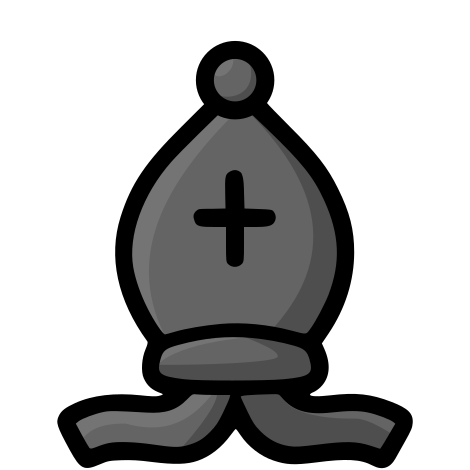


چهار مهره سبک هنوز در خانهاند
اسبهای و و فیلهای و همچنان در خانههای آغازین خود هستند. پیادههای و از پیش مسیرهایی باز کردهاند تا هر حرکت گسترشی نقشی مشخص داشته باشد.
اشتباههای رایج
گسترش و مرکزیسازی
مهره گسترشیافته از خانهای مفید در بازی شرکت میکند. مرکزیسازی آن را به مرکز نزدیک یا اثرش را بر مرکز بیشتر میکند. مهره میتواند بدون اشغال خانه مرکزی بهخوبی گسترش یافته باشد.
مشاهده اصطلاحمنابع
- 1.Chess Strategy, Project Gutenberg
- 2.The Principles of the Opening | Chess for Beginners, Chess.com