
'%3e%3cpath%20d='M21.97,16.783C18.592,14.338%2014.595,14.954%2012,17.1C11.344,16.628%2010.011,15.91%209.895,15.621C9.48,14.59%207.341,14.568%207.01,14.882C6.812,15.07%206.83,15.344%206.553,15.331C4.832,15.252%203.708,15.794%201.993,16.774'%20style='fill:none;fill-rule:nonzero;stroke:%2310b981;stroke-width:1.14px;'/%3e%3c/g%3e%3cg%20transform='matrix(1,0,0,2.04091,-14.1682,-22.4853)'%3e%3cpath%20d='M15.074,18.836L15.074,17.423'%20style='fill:none;stroke:%2310b981;stroke-width:0.62px;stroke-linecap:square;stroke-miterlimit:1.5;'/%3e%3c/g%3e%3cg%20transform='matrix(1,0,0,2.04091,6.00754,-22.5274)'%3e%3cpath%20d='M15.074,18.863L15.074,17.423'%20style='fill:none;stroke:%2310b981;stroke-width:0.62px;stroke-linecap:square;stroke-miterlimit:1.5;'/%3e%3c/g%3e%3cg%20transform='matrix(1,0,0,1.10679,-1,-3.20585)'%3e%3cpath%20d='M2,5.5C5.5,3.5%209.5,4%2012,5.8C14.5,4%2018.5,3.5%2022,5.5L22,16.8C18.5,14.8%2014.5,15.3%2012,17.1C9.5,15.3%205.5,14.8%202,16.8L2,5.5Z'%20style='fill:none;fill-rule:nonzero;stroke:%236ee7b7;stroke-width:1.14px;'/%3e%3c/g%3e%3cg%20transform='matrix(1,0,0,1.026,-1,-2.90714)'%3e%3cpath%20d='M12,5.8L12,17.1'%20style='fill:none;fill-rule:nonzero;stroke:%236ee7b7;stroke-width:1.2px;'/%3e%3c/g%3e%3cg%20transform='matrix(0.868549,0,0,1.12022,1.58071,-2.86274)'%3e%3cpath%20d='M8,15.6L8,19.8L6.5,18.5L5,19.8L5,15.6'%20style='fill:none;fill-rule:nonzero;stroke:%236ee7b7;stroke-width:1.2px;'/%3e%3c/g%3e%3cg%20transform='matrix(1,0,0,1,-1,-3.75633)'%3e%3cpath%20d='M5,9C6.467,8.4%207.967,8.5%209.5,9.3'%20style='fill:none;fill-rule:nonzero;stroke:%236ee7b7;stroke-width:1.2px;'/%3e%3c/g%3e%3cg%20transform='matrix(1,0,0,1,-1,-3.75633)'%3e%3cpath%20d='M5,12C6.333,11.467%208.119,11.635%209.119,12.235'%20style='fill:none;fill-rule:nonzero;stroke:%236ee7b7;stroke-width:1.2px;'/%3e%3c/g%3e%3cg%20transform='matrix(0.988254,-0.152823,0.152823,0.988254,6.85356,-2.53705)'%3e%3cpath%20d='M5,12C6.333,11.467%208.119,11.635%209.119,12.235'%20style='fill:none;fill-rule:nonzero;stroke:%236ee7b7;stroke-width:1.2px;'/%3e%3c/g%3e%3cg%20transform='matrix(1,0,0,1,-1,-3.75633)'%3e%3cpath%20d='M14.5,9.3C16.033,8.5%2017.533,8.4%2019,9'%20style='fill:none;fill-rule:nonzero;stroke:%236ee7b7;stroke-width:1.2px;'/%3e%3c/g%3e%3cg%20transform='matrix(1,0,0,1,-1,2.24367)'%3e%3cpath%20d='M5,9C6.467,8.4%207.967,8.5%209.5,9.3'%20style='fill:none;fill-rule:nonzero;stroke:%236ee7b7;stroke-width:1.2px;'/%3e%3c/g%3e%3cg%20transform='matrix(0.999988,0.00496871,-0.00496871,0.999988,-0.955288,2.16055)'%3e%3cpath%20d='M14.5,9.3C16.033,8.5%2017.533,8.4%2019,9'%20style='fill:none;fill-rule:nonzero;stroke:%236ee7b7;stroke-width:1.2px;'/%3e%3c/g%3e%3c/svg%3e)
توضیح
دفاع از روبهرو در آخربازی شاه و رخ در برابر شاه، رخ و پیاده رخ میدهد. رخ مدافع جلوی پیاده ، در مسیر حرکت آن، قرار میگیرد و شاه مهاجم را از روبهرو کیش میدهد.
رخ فاصله روبهرو را حفظ میکند
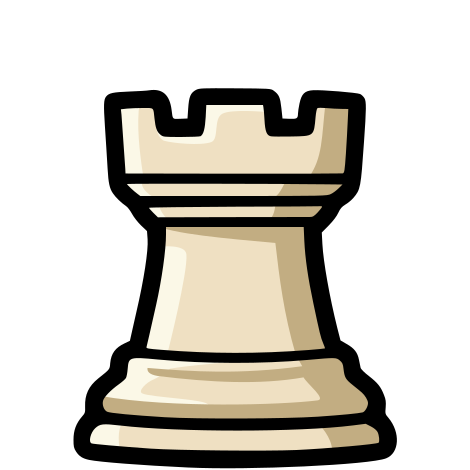
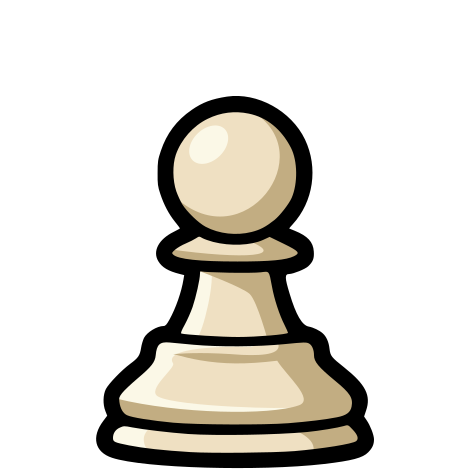


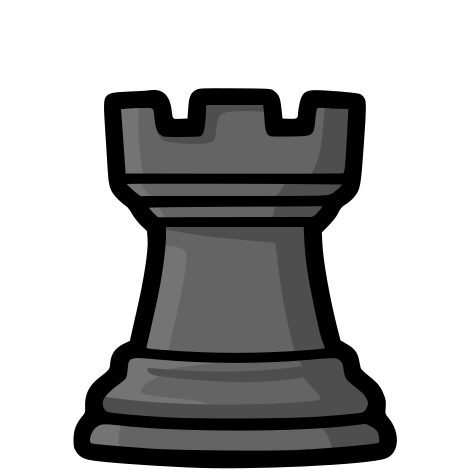
رخ واقعاً جلوی پیاده است
رخ سیاه در ، در همان ستون و جلوی پیاده قرار دارد. فاصله امکان تکرار کیشهای روبهرو را میدهد.
هدف این است که شاه به خانهای امن نرسد که از آن بتواند ترفیع را پشتیبانی کند. هر کیش شاه را وادار میکند عقب برود، کنار بکشد یا بکوشد به رخ نزدیک شود. اگر وضعیت اجازهٔ تعویض رخها را بدهد و آخربازی شاه و پیاده در برابر شاهِ حاصل مساوی باشد، رخ مدافع میتواند آن تعویض را نیز پیشنهاد کند.
فضا تعیینکننده است. ردیف خطی افقی از خانههای صفحه است. به عنوان راهنما، دفاع زمانی شانس خوبی دارد که دستکم سه ردیف میان پیاده و رخ مدافع فاصله باشد. این جدایی را حفظ میکند. هرچه پیاده عقبتر باشد، رخ زمان بیشتری برای تکرار روش دارد.
قاعدهٔ سه تساوی را تضمین نمیکند. ستون پیاده، نوبت حرکت، شاه مدافع و پناهگاههای احتمالی شاه مهاجم میتوانند نتیجه را تغییر دهند. پیادههای مرکزی و پیادههای فیل اغلب دشواری بیشتری از پیادهٔ رخ ایجاد میکنند، بنابراین هندسهٔ دقیق همچنان باید بررسی شود.
اشتباههای رایج
رخ پشت پیاده
در دفاع از روبهرو، رخ جلوی پیاده است، نه پشت آن.
قاعدهٔ سهٔ خودکار
سه ردیف راهنمای مطلوبی است، اما نوبت حرکت، جای شاهها و ستون پیاده همچنان اهمیت دارند.
منابع
- 1.Rook and pawn versus rook endgame, Wikipedia contributors
- 2.Checking distance, ChessBase