
'%3e%3cpath%20d='M21.97,16.783C18.592,14.338%2014.595,14.954%2012,17.1C11.344,16.628%2010.011,15.91%209.895,15.621C9.48,14.59%207.341,14.568%207.01,14.882C6.812,15.07%206.83,15.344%206.553,15.331C4.832,15.252%203.708,15.794%201.993,16.774'%20style='fill:none;fill-rule:nonzero;stroke:%2310b981;stroke-width:1.14px;'/%3e%3c/g%3e%3cg%20transform='matrix(1,0,0,2.04091,-14.1682,-22.4853)'%3e%3cpath%20d='M15.074,18.836L15.074,17.423'%20style='fill:none;stroke:%2310b981;stroke-width:0.62px;stroke-linecap:square;stroke-miterlimit:1.5;'/%3e%3c/g%3e%3cg%20transform='matrix(1,0,0,2.04091,6.00754,-22.5274)'%3e%3cpath%20d='M15.074,18.863L15.074,17.423'%20style='fill:none;stroke:%2310b981;stroke-width:0.62px;stroke-linecap:square;stroke-miterlimit:1.5;'/%3e%3c/g%3e%3cg%20transform='matrix(1,0,0,1.10679,-1,-3.20585)'%3e%3cpath%20d='M2,5.5C5.5,3.5%209.5,4%2012,5.8C14.5,4%2018.5,3.5%2022,5.5L22,16.8C18.5,14.8%2014.5,15.3%2012,17.1C9.5,15.3%205.5,14.8%202,16.8L2,5.5Z'%20style='fill:none;fill-rule:nonzero;stroke:%236ee7b7;stroke-width:1.14px;'/%3e%3c/g%3e%3cg%20transform='matrix(1,0,0,1.026,-1,-2.90714)'%3e%3cpath%20d='M12,5.8L12,17.1'%20style='fill:none;fill-rule:nonzero;stroke:%236ee7b7;stroke-width:1.2px;'/%3e%3c/g%3e%3cg%20transform='matrix(0.868549,0,0,1.12022,1.58071,-2.86274)'%3e%3cpath%20d='M8,15.6L8,19.8L6.5,18.5L5,19.8L5,15.6'%20style='fill:none;fill-rule:nonzero;stroke:%236ee7b7;stroke-width:1.2px;'/%3e%3c/g%3e%3cg%20transform='matrix(1,0,0,1,-1,-3.75633)'%3e%3cpath%20d='M5,9C6.467,8.4%207.967,8.5%209.5,9.3'%20style='fill:none;fill-rule:nonzero;stroke:%236ee7b7;stroke-width:1.2px;'/%3e%3c/g%3e%3cg%20transform='matrix(1,0,0,1,-1,-3.75633)'%3e%3cpath%20d='M5,12C6.333,11.467%208.119,11.635%209.119,12.235'%20style='fill:none;fill-rule:nonzero;stroke:%236ee7b7;stroke-width:1.2px;'/%3e%3c/g%3e%3cg%20transform='matrix(0.988254,-0.152823,0.152823,0.988254,6.85356,-2.53705)'%3e%3cpath%20d='M5,12C6.333,11.467%208.119,11.635%209.119,12.235'%20style='fill:none;fill-rule:nonzero;stroke:%236ee7b7;stroke-width:1.2px;'/%3e%3c/g%3e%3cg%20transform='matrix(1,0,0,1,-1,-3.75633)'%3e%3cpath%20d='M14.5,9.3C16.033,8.5%2017.533,8.4%2019,9'%20style='fill:none;fill-rule:nonzero;stroke:%236ee7b7;stroke-width:1.2px;'/%3e%3c/g%3e%3cg%20transform='matrix(1,0,0,1,-1,2.24367)'%3e%3cpath%20d='M5,9C6.467,8.4%207.967,8.5%209.5,9.3'%20style='fill:none;fill-rule:nonzero;stroke:%236ee7b7;stroke-width:1.2px;'/%3e%3c/g%3e%3cg%20transform='matrix(0.999988,0.00496871,-0.00496871,0.999988,-0.955288,2.16055)'%3e%3cpath%20d='M14.5,9.3C16.033,8.5%2017.533,8.4%2019,9'%20style='fill:none;fill-rule:nonzero;stroke:%236ee7b7;stroke-width:1.2px;'/%3e%3c/g%3e%3c/svg%3e)
توضیح
جستوجوی یک موتور شطرنج، یعنی برنامهای که وضعیتها را تحلیل میکند، باید جایی متوقف شود. ارزیابی دقیقاً در آن نقطه میتواند گمراهکننده باشد اگر توالی فوری گرفتنها هنوز ادامه داشته باشد. ممکن است مهرهای ظاهراً برده شده باشد، چون برنامه پس از نخستین گرفتن متوقف شده است، در حالی که حریف در حرکت بعدی میتواند بازپس بگیرد. جستوجوی سکون محاسبه را تا رسیدن به وضعیتی آرامتر ادامه میدهد.
حل کردن تعویض پیش از ارزیابی



برش اسمی ناپایدار
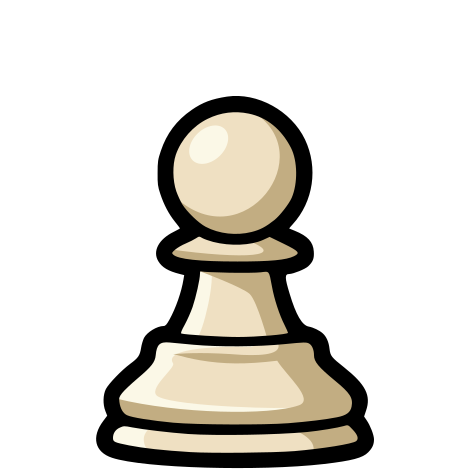
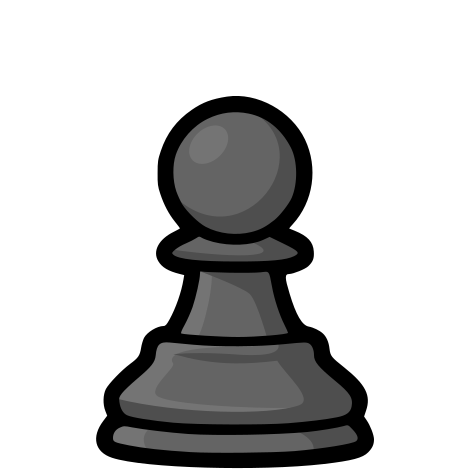
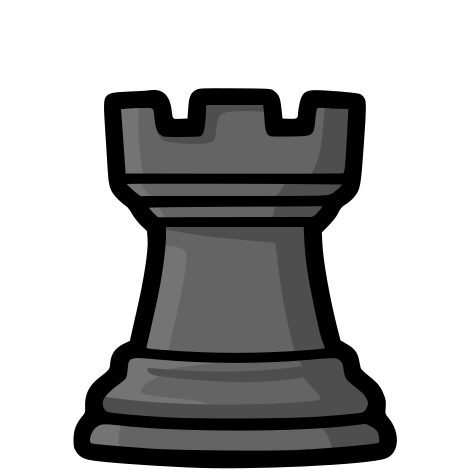
صفحه یک پیادهٔ سیاهِ قابل گرفتن در را نشان میدهد. ناپایداری شیء دیداری دیگری نیست، بلکه از وجود گرفتنهای فوری ناشی میشود. MZ-QS-Captures 1.0 روش stand pat را حفظ میکند و وقتی شاه در کیش نیست، همهٔ گرفتنهای قانونی را بررسی میکند.
آرامتر به معنای نبودن برنامه یا تهدید نیست. یعنی ارزیابی زیر سلطهٔ توالی اجباری نزدیکی نباشد که ماتریال یا امنیت شاه را بهشدت تغییر میدهد. پیادهسازی معمولاً گرفتنها را بررسی میکند. اگر شاه در کیش باشد، باید پاسخهای قانونی را بسنجد. برخی موتورها ترفیعها یا کیشهای منتخب را نیز میگنجانند.
وقتی شاه در کیش نیست، موتور میتواند ارزیابی ایستای فعلی را بدون انجام گرفتن دیگری به عنوان مرجع نگه دارد. این مرجع stand pat نام دارد. سپس فقط حرکتهای تاکتیکیای را ادامه میدهد که ظاهراً میتوانند آن ارزش را بهتر کنند. ابزارهایی مانند به رد گرفتنهایی کمک میکنند که احتمالاً ماتریال از دست میدهند.
این فن خطاهای اثر افق را کاهش میدهد، یعنی مواردی که پیامدی تاکتیکی درست فراتر از حد جستوجو قرار دارد. با این حال، بررسی کامل همهٔ حرکتهای قانونی نیست. اگر حرکتهای بسیار زیادی پذیرفته شوند، جستوجو میتواند بهشدت گسترش یابد و اگر حرکتهای بسیار کمی پذیرفته شوند، تاکتیکی مهم ممکن است از دست برود. بنابراین پالایشها و ضروریاند.
کاربرد و بافت
برای یک ، سکون آزمونی عملی برای پایداری ارزیابی است، نه ادعایی دربارهٔ واقعاً آرام بودن وضعیت.
اشتباههای رایج
جستوجوی سکون و جستوجوی تاکتیکی کامل
جستوجوی سکون فقط مجموعهای منتخب از حرکتهایی را بسط میدهد که پاسخ مستقیم میطلبند. ثابت نمیکند همهٔ تاکتیکهای ممکن حل شدهاند.
منابع
- 1.Quiescence Search, Chess Programming Wiki