
'%3e%3cpath%20d='M21.97,16.783C18.592,14.338%2014.595,14.954%2012,17.1C11.344,16.628%2010.011,15.91%209.895,15.621C9.48,14.59%207.341,14.568%207.01,14.882C6.812,15.07%206.83,15.344%206.553,15.331C4.832,15.252%203.708,15.794%201.993,16.774'%20style='fill:none;fill-rule:nonzero;stroke:%2310b981;stroke-width:1.14px;'/%3e%3c/g%3e%3cg%20transform='matrix(1,0,0,2.04091,-14.1682,-22.4853)'%3e%3cpath%20d='M15.074,18.836L15.074,17.423'%20style='fill:none;stroke:%2310b981;stroke-width:0.62px;stroke-linecap:square;stroke-miterlimit:1.5;'/%3e%3c/g%3e%3cg%20transform='matrix(1,0,0,2.04091,6.00754,-22.5274)'%3e%3cpath%20d='M15.074,18.863L15.074,17.423'%20style='fill:none;stroke:%2310b981;stroke-width:0.62px;stroke-linecap:square;stroke-miterlimit:1.5;'/%3e%3c/g%3e%3cg%20transform='matrix(1,0,0,1.10679,-1,-3.20585)'%3e%3cpath%20d='M2,5.5C5.5,3.5%209.5,4%2012,5.8C14.5,4%2018.5,3.5%2022,5.5L22,16.8C18.5,14.8%2014.5,15.3%2012,17.1C9.5,15.3%205.5,14.8%202,16.8L2,5.5Z'%20style='fill:none;fill-rule:nonzero;stroke:%236ee7b7;stroke-width:1.14px;'/%3e%3c/g%3e%3cg%20transform='matrix(1,0,0,1.026,-1,-2.90714)'%3e%3cpath%20d='M12,5.8L12,17.1'%20style='fill:none;fill-rule:nonzero;stroke:%236ee7b7;stroke-width:1.2px;'/%3e%3c/g%3e%3cg%20transform='matrix(0.868549,0,0,1.12022,1.58071,-2.86274)'%3e%3cpath%20d='M8,15.6L8,19.8L6.5,18.5L5,19.8L5,15.6'%20style='fill:none;fill-rule:nonzero;stroke:%236ee7b7;stroke-width:1.2px;'/%3e%3c/g%3e%3cg%20transform='matrix(1,0,0,1,-1,-3.75633)'%3e%3cpath%20d='M5,9C6.467,8.4%207.967,8.5%209.5,9.3'%20style='fill:none;fill-rule:nonzero;stroke:%236ee7b7;stroke-width:1.2px;'/%3e%3c/g%3e%3cg%20transform='matrix(1,0,0,1,-1,-3.75633)'%3e%3cpath%20d='M5,12C6.333,11.467%208.119,11.635%209.119,12.235'%20style='fill:none;fill-rule:nonzero;stroke:%236ee7b7;stroke-width:1.2px;'/%3e%3c/g%3e%3cg%20transform='matrix(0.988254,-0.152823,0.152823,0.988254,6.85356,-2.53705)'%3e%3cpath%20d='M5,12C6.333,11.467%208.119,11.635%209.119,12.235'%20style='fill:none;fill-rule:nonzero;stroke:%236ee7b7;stroke-width:1.2px;'/%3e%3c/g%3e%3cg%20transform='matrix(1,0,0,1,-1,-3.75633)'%3e%3cpath%20d='M14.5,9.3C16.033,8.5%2017.533,8.4%2019,9'%20style='fill:none;fill-rule:nonzero;stroke:%236ee7b7;stroke-width:1.2px;'/%3e%3c/g%3e%3cg%20transform='matrix(1,0,0,1,-1,2.24367)'%3e%3cpath%20d='M5,9C6.467,8.4%207.967,8.5%209.5,9.3'%20style='fill:none;fill-rule:nonzero;stroke:%236ee7b7;stroke-width:1.2px;'/%3e%3c/g%3e%3cg%20transform='matrix(0.999988,0.00496871,-0.00496871,0.999988,-0.955288,2.16055)'%3e%3cpath%20d='M14.5,9.3C16.033,8.5%2017.533,8.4%2019,9'%20style='fill:none;fill-rule:nonzero;stroke:%236ee7b7;stroke-width:1.2px;'/%3e%3c/g%3e%3c/svg%3e)
توضیح
مات دانشمند هنگام حملهٔ سفید پیادهٔ f7 و هنگام حملهٔ سیاه پیادهٔ f2 را هدف میگیرد. در آغاز، تنها شاه از آن پیاده حمایت میکند. وزیر و فیل میتوانند با هم به آن حمله کنند تا گرفتن با وزیر همراه با کیش باشد و فیل نیز از وزیر حمایت کند.
در شناختهشدهترین آرایش، فیل سفید به سوی f7 نشانه میرود و وزیر به h5 میرسد. اگر سیاه حرکتی انجام دهد که به تهدید پاسخ ندهد، Qxf7# میتواند بازی را پایان دهد. در ، Q به معنی وزیر است، x گرفتن را نشان میدهد و # نشانهٔ مات است.
وزیر با رفتن به مات میکند



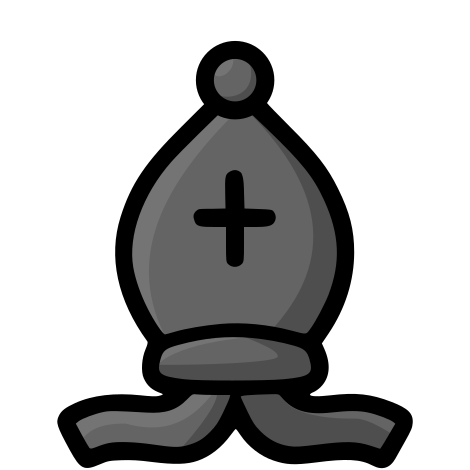

وزیر در ، فیل در
این وضعیت یک مات واقعی را نشان میدهد: وزیر محدودهٔ نزدیک را کنترل میکند و فیل مانع میشود شاه آن را بگیرد.
مات دانشمند اجباری نیست. میتوان با دفاع از f7، بستن خط فیل یا حمله به وزیر در حالی که تهدید نیز پاسخ داده میشود آن را متوقف کرد. بیرون آوردن زودهنگام وزیر همچنین ممکن است زمان از دست بدهد: حریف هنگام حمله به وزیر میتواند مهرههایش را گسترش دهد، یعنی اسبها و فیلها را به خانههای مفید ببرد.
اشتباههای رایج
مات دانشمند و مات احمق
مات دانشمند از وزیر و فیل علیه f7 یا f2 استفاده میکند و اجباری نیست. مات احمق از باز شدن قطر شاه خودی پدید میآید و به سیاه اجازه میدهد تنها در دو حرکت مات کند.
مشاهده اصطلاحتهدید مات و مات واقعی
نشانه رفتن وزیر و فیل به f7 فقط یک تهدید میسازد. اگر مدافع از خانه محافظت کند، قطر را ببندد یا با حمله به وزیر تمپو بگیرد، مات فوری وجود ندارد.
منابع
- 1.Scholar's Mate, Chess.com
- 2.The Checkmate Patterns Manual, New In Chess