
'%3e%3cpath%20d='M21.97,16.783C18.592,14.338%2014.595,14.954%2012,17.1C11.344,16.628%2010.011,15.91%209.895,15.621C9.48,14.59%207.341,14.568%207.01,14.882C6.812,15.07%206.83,15.344%206.553,15.331C4.832,15.252%203.708,15.794%201.993,16.774'%20style='fill:none;fill-rule:nonzero;stroke:%2310b981;stroke-width:1.14px;'/%3e%3c/g%3e%3cg%20transform='matrix(1,0,0,2.04091,-14.1682,-22.4853)'%3e%3cpath%20d='M15.074,18.836L15.074,17.423'%20style='fill:none;stroke:%2310b981;stroke-width:0.62px;stroke-linecap:square;stroke-miterlimit:1.5;'/%3e%3c/g%3e%3cg%20transform='matrix(1,0,0,2.04091,6.00754,-22.5274)'%3e%3cpath%20d='M15.074,18.863L15.074,17.423'%20style='fill:none;stroke:%2310b981;stroke-width:0.62px;stroke-linecap:square;stroke-miterlimit:1.5;'/%3e%3c/g%3e%3cg%20transform='matrix(1,0,0,1.10679,-1,-3.20585)'%3e%3cpath%20d='M2,5.5C5.5,3.5%209.5,4%2012,5.8C14.5,4%2018.5,3.5%2022,5.5L22,16.8C18.5,14.8%2014.5,15.3%2012,17.1C9.5,15.3%205.5,14.8%202,16.8L2,5.5Z'%20style='fill:none;fill-rule:nonzero;stroke:%236ee7b7;stroke-width:1.14px;'/%3e%3c/g%3e%3cg%20transform='matrix(1,0,0,1.026,-1,-2.90714)'%3e%3cpath%20d='M12,5.8L12,17.1'%20style='fill:none;fill-rule:nonzero;stroke:%236ee7b7;stroke-width:1.2px;'/%3e%3c/g%3e%3cg%20transform='matrix(0.868549,0,0,1.12022,1.58071,-2.86274)'%3e%3cpath%20d='M8,15.6L8,19.8L6.5,18.5L5,19.8L5,15.6'%20style='fill:none;fill-rule:nonzero;stroke:%236ee7b7;stroke-width:1.2px;'/%3e%3c/g%3e%3cg%20transform='matrix(1,0,0,1,-1,-3.75633)'%3e%3cpath%20d='M5,9C6.467,8.4%207.967,8.5%209.5,9.3'%20style='fill:none;fill-rule:nonzero;stroke:%236ee7b7;stroke-width:1.2px;'/%3e%3c/g%3e%3cg%20transform='matrix(1,0,0,1,-1,-3.75633)'%3e%3cpath%20d='M5,12C6.333,11.467%208.119,11.635%209.119,12.235'%20style='fill:none;fill-rule:nonzero;stroke:%236ee7b7;stroke-width:1.2px;'/%3e%3c/g%3e%3cg%20transform='matrix(0.988254,-0.152823,0.152823,0.988254,6.85356,-2.53705)'%3e%3cpath%20d='M5,12C6.333,11.467%208.119,11.635%209.119,12.235'%20style='fill:none;fill-rule:nonzero;stroke:%236ee7b7;stroke-width:1.2px;'/%3e%3c/g%3e%3cg%20transform='matrix(1,0,0,1,-1,-3.75633)'%3e%3cpath%20d='M14.5,9.3C16.033,8.5%2017.533,8.4%2019,9'%20style='fill:none;fill-rule:nonzero;stroke:%236ee7b7;stroke-width:1.2px;'/%3e%3c/g%3e%3cg%20transform='matrix(1,0,0,1,-1,2.24367)'%3e%3cpath%20d='M5,9C6.467,8.4%207.967,8.5%209.5,9.3'%20style='fill:none;fill-rule:nonzero;stroke:%236ee7b7;stroke-width:1.2px;'/%3e%3c/g%3e%3cg%20transform='matrix(0.999988,0.00496871,-0.00496871,0.999988,-0.955288,2.16055)'%3e%3cpath%20d='M14.5,9.3C16.033,8.5%2017.533,8.4%2019,9'%20style='fill:none;fill-rule:nonzero;stroke:%236ee7b7;stroke-width:1.2px;'/%3e%3c/g%3e%3c/svg%3e)
توضیح
قانون تاراش میگوید رخها معمولاً پشت پیادههای آزاد بهترین جای را دارند. پیاده آزاد در همان ستون یا ستون مجاور هیچ پیاده حریفی در جلو ندارد تا هنگام پیشروی آن را مسدود یا بگیرد. این راهنما هم برای پیاده آزاد خودی و هم برای پیاده آزاد حریف کاربرد دارد.
رخ پشت پیاده خودی از آن پشتیبانی میکند و با پیشروی پیاده دامنه بیشتری به دست میآورد. رخ پشت پیاده حریف به آن حمله میکند و با نزدیک شدن پیاده به ترفیع فضای بیشتری حفظ میکند. در مقابل، رخ جلوی پیاده خودی اغلب تحرک خود را از دست میدهد، زیرا پیاده پیشرونده آن را به سوی لبه میراند.
پشتیبانی از پشت
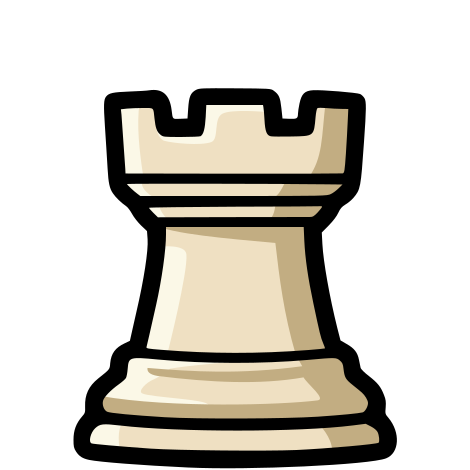

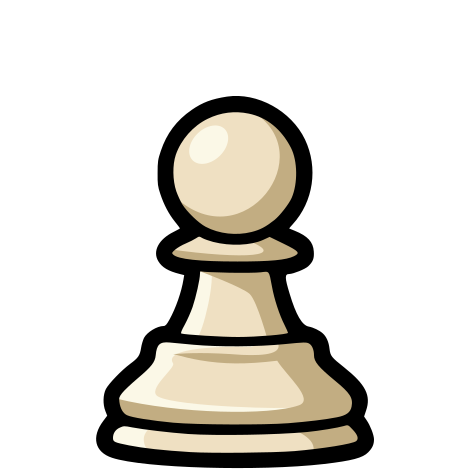

رخ در ، پیاده در
پیادهٔ آزاد است و رخِ در همان ستون از پشت از آن پشتیبانی میکند.
راهنما، نه قانون مطلق
فعالیت ممکن است از جایگیری ایدهآل مهمتر باشد. اگر رخ از پیش جلوی عبور شاه حریف از یک عرض یا ستون را میگیرد، کیشهای جانبی لازماند یا رخ میتواند پیادههای دیگر را جمع کند، ترک پشت پیاده ممکن است درست باشد. پیادههای رخ نیز استثنا میسازند: از پهلو دفاع میکند و بعضی وضعیتها دفاع از جلو میخواهند.
وقتی کیش جانبی با قاعده رقابت میکند
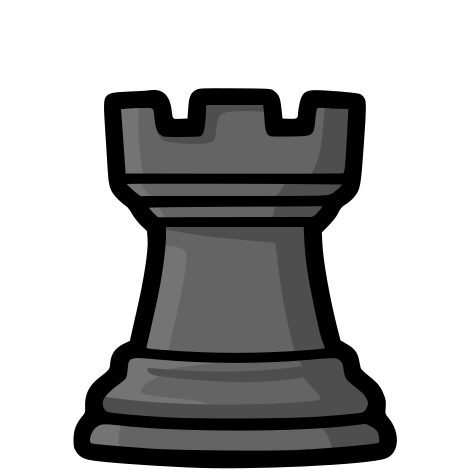
دو طرح دفاعی واقعی
شاهِ از پیادهٔ سفیدِ محافظت میکند. رخ سیاه بهجای رفتن پشت پیاده، را بهعنوان کیش جانبی در اختیار دارد که تساوی دقیق را حفظ میکند.
قانون را پرسش نخست بدانید: آیا رخ میتواند بدون اتلاف زمان یا اجازه دادن به تاکتیک، پشت پیاده قرار گیرد؟ سپس وضعیت مشخص را محاسبه کنید. الگوهایی مانند و نشان میدهند جای شاهها و فاصله کیش ممکن است از یک فرمول عمومی مهمتر باشند.
اشتباههای رایج
رخ همیشه باید پشت پیاده برود
این یک قاعده عملی با استثناهای فراوان است. فعالیت فوری و هندسه دقیق ممکن است مهمتر باشند.
قانون فقط برای پیاده خودی است
تاراش هر دو کاربرد را بیان کرد: پشتیبانی از پیاده آزاد خودی از پشت و مهار پیاده آزاد حریف از پشت.
منابع
- 1.Tarrasch rule, Wikipedia
- 2.Rook Endgame: The Principles, Chess.com