
'%3e%3cpath%20d='M21.97,16.783C18.592,14.338%2014.595,14.954%2012,17.1C11.344,16.628%2010.011,15.91%209.895,15.621C9.48,14.59%207.341,14.568%207.01,14.882C6.812,15.07%206.83,15.344%206.553,15.331C4.832,15.252%203.708,15.794%201.993,16.774'%20style='fill:none;fill-rule:nonzero;stroke:%2310b981;stroke-width:1.14px;'/%3e%3c/g%3e%3cg%20transform='matrix(1,0,0,2.04091,-14.1682,-22.4853)'%3e%3cpath%20d='M15.074,18.836L15.074,17.423'%20style='fill:none;stroke:%2310b981;stroke-width:0.62px;stroke-linecap:square;stroke-miterlimit:1.5;'/%3e%3c/g%3e%3cg%20transform='matrix(1,0,0,2.04091,6.00754,-22.5274)'%3e%3cpath%20d='M15.074,18.863L15.074,17.423'%20style='fill:none;stroke:%2310b981;stroke-width:0.62px;stroke-linecap:square;stroke-miterlimit:1.5;'/%3e%3c/g%3e%3cg%20transform='matrix(1,0,0,1.10679,-1,-3.20585)'%3e%3cpath%20d='M2,5.5C5.5,3.5%209.5,4%2012,5.8C14.5,4%2018.5,3.5%2022,5.5L22,16.8C18.5,14.8%2014.5,15.3%2012,17.1C9.5,15.3%205.5,14.8%202,16.8L2,5.5Z'%20style='fill:none;fill-rule:nonzero;stroke:%236ee7b7;stroke-width:1.14px;'/%3e%3c/g%3e%3cg%20transform='matrix(1,0,0,1.026,-1,-2.90714)'%3e%3cpath%20d='M12,5.8L12,17.1'%20style='fill:none;fill-rule:nonzero;stroke:%236ee7b7;stroke-width:1.2px;'/%3e%3c/g%3e%3cg%20transform='matrix(0.868549,0,0,1.12022,1.58071,-2.86274)'%3e%3cpath%20d='M8,15.6L8,19.8L6.5,18.5L5,19.8L5,15.6'%20style='fill:none;fill-rule:nonzero;stroke:%236ee7b7;stroke-width:1.2px;'/%3e%3c/g%3e%3cg%20transform='matrix(1,0,0,1,-1,-3.75633)'%3e%3cpath%20d='M5,9C6.467,8.4%207.967,8.5%209.5,9.3'%20style='fill:none;fill-rule:nonzero;stroke:%236ee7b7;stroke-width:1.2px;'/%3e%3c/g%3e%3cg%20transform='matrix(1,0,0,1,-1,-3.75633)'%3e%3cpath%20d='M5,12C6.333,11.467%208.119,11.635%209.119,12.235'%20style='fill:none;fill-rule:nonzero;stroke:%236ee7b7;stroke-width:1.2px;'/%3e%3c/g%3e%3cg%20transform='matrix(0.988254,-0.152823,0.152823,0.988254,6.85356,-2.53705)'%3e%3cpath%20d='M5,12C6.333,11.467%208.119,11.635%209.119,12.235'%20style='fill:none;fill-rule:nonzero;stroke:%236ee7b7;stroke-width:1.2px;'/%3e%3c/g%3e%3cg%20transform='matrix(1,0,0,1,-1,-3.75633)'%3e%3cpath%20d='M14.5,9.3C16.033,8.5%2017.533,8.4%2019,9'%20style='fill:none;fill-rule:nonzero;stroke:%236ee7b7;stroke-width:1.2px;'/%3e%3c/g%3e%3cg%20transform='matrix(1,0,0,1,-1,2.24367)'%3e%3cpath%20d='M5,9C6.467,8.4%207.967,8.5%209.5,9.3'%20style='fill:none;fill-rule:nonzero;stroke:%236ee7b7;stroke-width:1.2px;'/%3e%3c/g%3e%3cg%20transform='matrix(0.999988,0.00496871,-0.00496871,0.999988,-0.955288,2.16055)'%3e%3cpath%20d='M14.5,9.3C16.033,8.5%2017.533,8.4%2019,9'%20style='fill:none;fill-rule:nonzero;stroke:%236ee7b7;stroke-width:1.2px;'/%3e%3c/g%3e%3c/svg%3e)
توضیح
توپ آلخین آرایشی از مهرههای سنگین، یعنی وزیر و رخها، است. هر سه در یک ستون عمودی صفحه قرار میگیرند، با هر دو رخ در جلو و وزیر پشت آنها . رخ جلویی نوک آرایش را میسازد، رخ دوم آن را تقویت میکند و وزیر از عقب هر دو را پشتیبانی میکند.
این آرایش بهویژه در ستون باز، یعنی ستونی بدون پیاده، یا ستون نیمهباز، یعنی ستونی بدون پیاده خودی، مفید است. میتواند چند مهاجم را علیه یک مهره، پیاده یا خانه ورود جمع کند. همچنین ممکن است در ستونی بسته شکل بگیرد، به شرط آنکه راه مشخصی برای بازکردن ستون پیش از سازماندهی دوباره حریف وجود داشته باشد.
سه مهرهٔ سنگین روی یک هدف


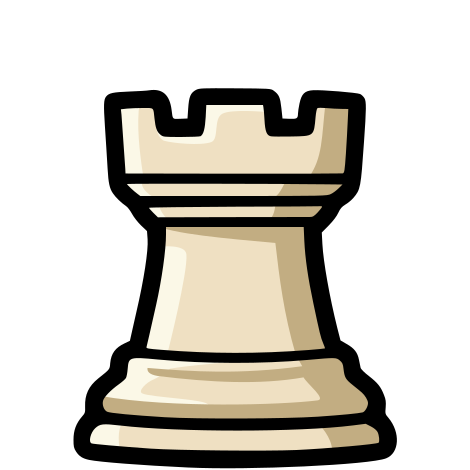

دو رخ در جلو، وزیر در پشت
ستون d ترتیب دقیق توپ را حفظ میکند: رخ جلویی در ، رخ دوم در و وزیر در . پیادهٔ هدفی است که خط را متوقف میکند.
صرف شکل آرایش کافی نیست
- ستون باید به هدفی واقعی یا مسیر نفوذ منتهی شود.
- ساختن آرایش زمان میبرد و مانورهای کند ممکن است ، یعنی توان واداشتن حریف به پاسخدادن به تهدیدها، را واگذار کنند.
- رخ جلویی باید پیشروی، تعویض یا گرفتن مفیدی داشته باشد و نباید در جای خود محبوس شود.
- یک مشخص، یعنی توالی اجباری مبتنی بر یک ایده تاکتیکی، ممکن است از کاملکردن شکل مهمتر باشد.
نام این آرایش با بازی الکساندر آلخین در برابر آرون نیمزوویچ در سانرمو سال 1930 پیوند دارد، جایی که آلخین با قراردادن وزیر پشت هر دو رخ آرایش را کامل کرد. با این حال نمونههای قدیمیتری از همین هندسه وجود دارند و منشأ دقیق چاپی نام کاملاً روشن نیست. بنابراین دقیقتر است گفته شود آن بازی این آرایش را مشهور کرد، نه اینکه آن را اختراع کرد.
اشتباههای رایج
هر باتری مهرههای سنگین
باتری هر نوع همخطی هماهنگ است، اما توپ آلخین مشخصاً به دو رخ در جلوی وزیر و در یک ستون نیاز دارد.
منابع
- 1.Alekhine's Gun, Chess.com
- 2.Alekhine's Gun, Chess Notes